The Core Tradeoff: Simplicity vs. Performance
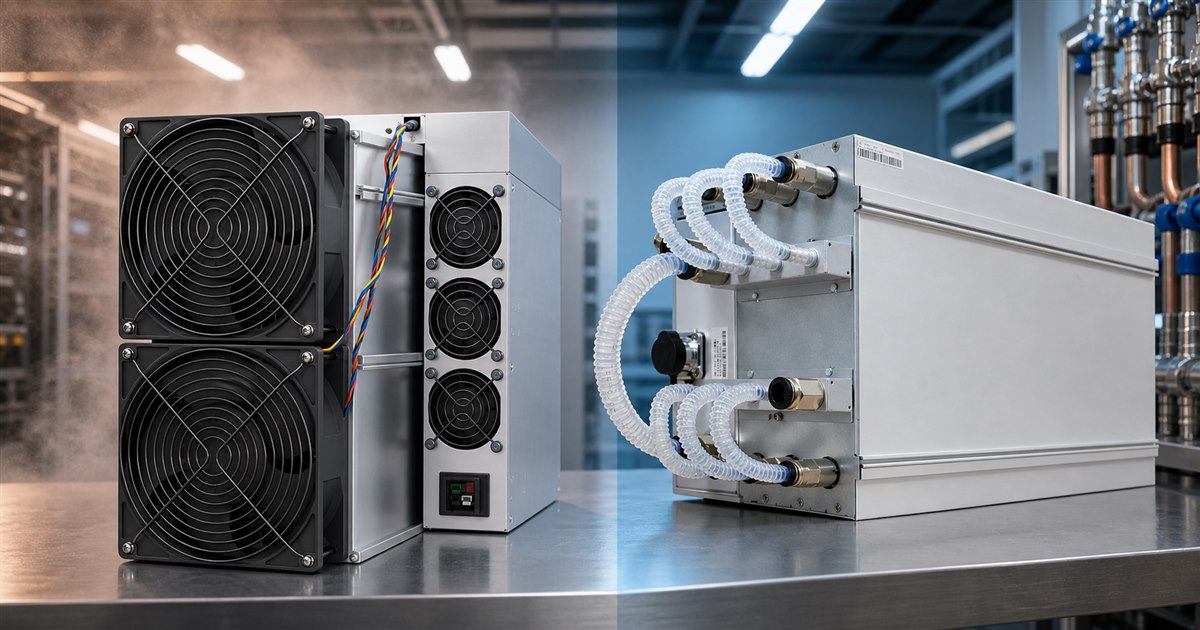
Every ASIC miner has to move heat out of the chip and into the room, or it throttles and dies early. Air cooling does this with fans and a heatsink. Hydro cooling does it by running coolant through cold plates bolted directly to the hashboards, then dumping that heat into a radiator. Both work. The question is which one actually fits your electricity rate, your space, and your noise tolerance.
If you're shopping for one of the best miners on the market right now, this is usually the first fork in the road — before brand, before price.
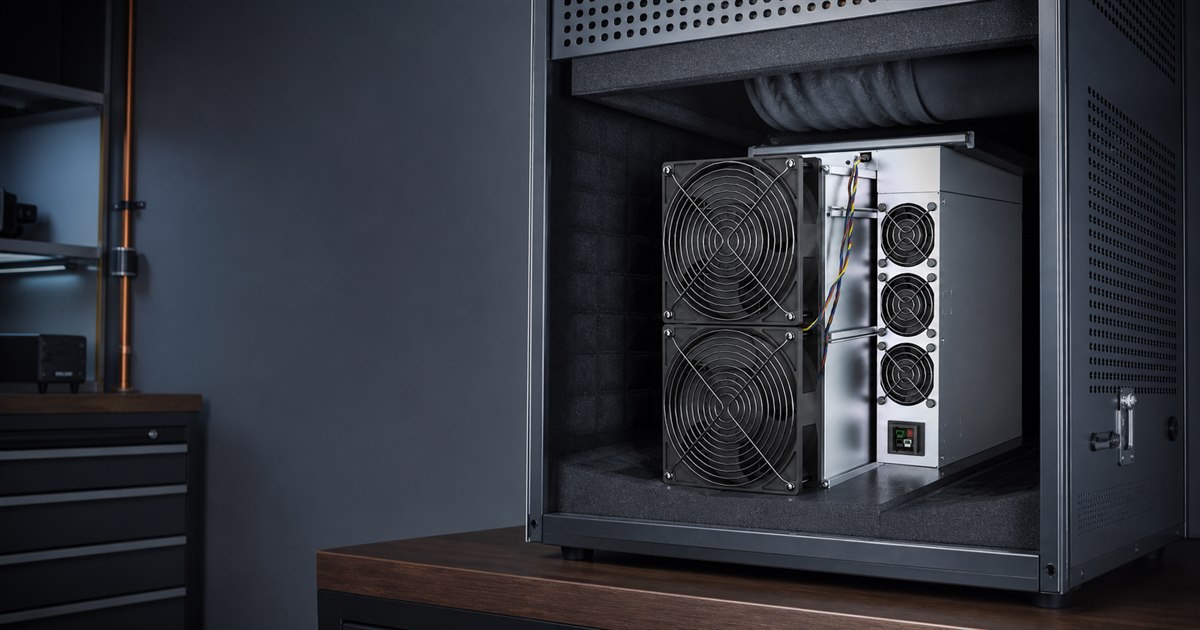
Air-Cooled Miners: What You're Actually Buying
Air cooling is the default for a reason. There's no plumbing, no coolant to bleed, no pump to fail. You unbox it, rack it, plug it in.
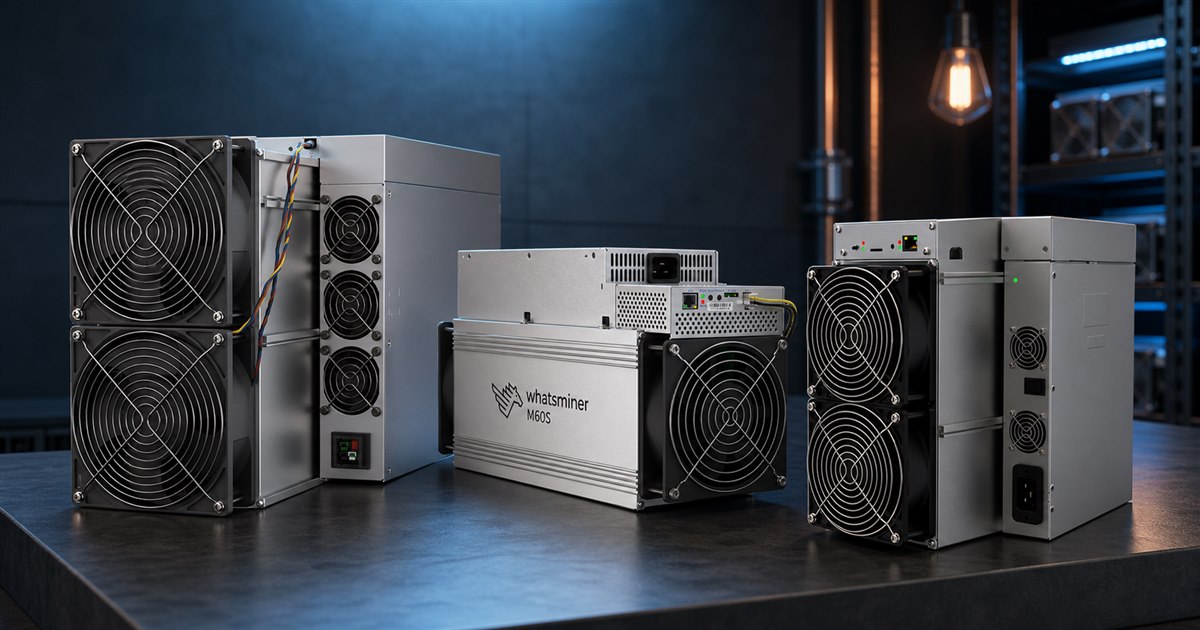
The Antminer S19 Hydro's air-cooled predecessors and most of Bitmain's mainline S19/S21 lineup fall in this category — reliable, well-documented, and the cheapest way into serious hashrate.
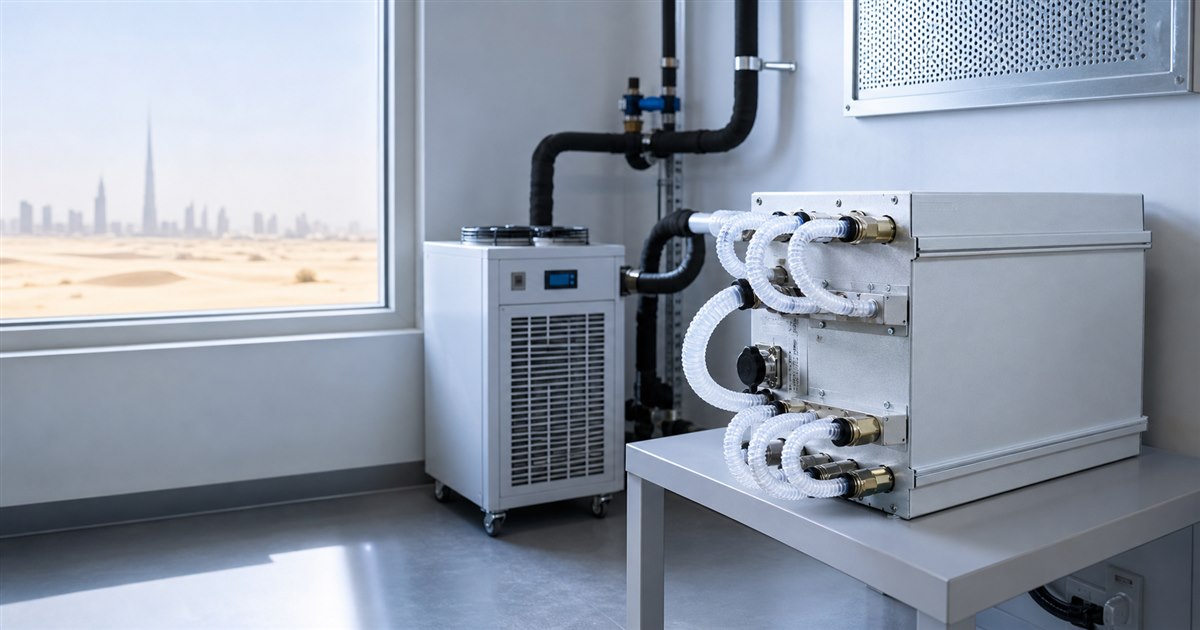
Hydro-Cooled Miners: What You're Paying For
Hydro cooling isn't a gimmick — the physics genuinely favor liquid over air for dense compute. A few real examples from current inventory:
| Miner | Hashrate | Power | Efficiency | Price |
|---|---|---|---|---|
| Whatsminer M56S Hydro | 298 TH/s | 5,550W | 18.6 J/TH | $3,150 |
| Antminer S19 Hydro | 158 TH/s | 5,451W | 34.5 J/TH | $1,620 |
| Antminer S21 Hyd | 335 TH/s | 5,360W | 16 J/TH | $5,400 |
| Antminer S21 XP Hyd | 473 TH/s | 5,676W | 12.0 J/TH | $7,200 |
Notice the pattern: the newer hydro units aren't just quieter, they're meaningfully more efficient. The S21 XP Hyd's 12.0 J/TH is close to best-in-class for the entire ASIC market, air or liquid — that efficiency gap compounds every single day you run it.
Why hydro wins on efficiency
Liquid has a much higher thermal transfer coefficient than air. Cold plates pull heat off the silicon faster and more evenly than a heatsink-and-fan setup can, which means the chips can run at a tighter voltage/frequency curve without throttling. That's the real reason hydro units post better J/TH numbers than their air-cooled siblings at similar hashrate tiers — it's not just marketing.
Why hydro wins on noise
30-40 dB is roughly library-quiet. That's the difference between a miner that has to live in a dedicated shed and one that can sit in a garage, basement, or even a spare room without anyone in the house noticing.
What hydro costs you
Side-by-Side Comparison
| Factor | Air-Cooled | Hydro-Cooled |
|---|---|---|
| Unit cost | Lower | 30-50% higher |
| Noise | 70-80 dB | 30-40 dB |
| Efficiency (J/TH) | Good | Excellent |
| Setup complexity | Plug-and-play | Requires plumbing |
| Best for | Industrial/warehouse space | Home, office, noise-sensitive sites |
| Climate tolerance | Struggles in heat/humidity | Handles heat better |
Which Should You Buy?
Go air-cooled if you have dedicated industrial or warehouse space where noise and ambient heat aren't a constraint, and you want the lowest cost per terahash to start.
Go hydro-cooled if you're mining anywhere near living or working space, in a hot climate, or you're running at scale where the efficiency gap on your electricity bill outweighs the higher unit price over 12-18 months.
For most home and small-farm buyers today, hydro units like the Antminer S21 Hyd hit the sweet spot — quiet enough to live with, efficient enough that the price premium pays for itself. For pure industrial scale where you're optimizing dollars per terahash above all else, air-cooled S19/S21-series units from our Bitcoin miners collection remain the more capital-efficient choice.
Frequently Asked Questions
Is hydro cooling worth the extra cost for a single miner?
For one unit in a bedroom, office, or apartment, yes — the noise reduction alone (70-80 dB down to 30-40 dB) is usually the deciding factor, and the efficiency gain narrows the payback period on the price premium.
Can I convert an air-cooled miner to hydro myself?
Third-party conversion kits exist, but they void manufacturer warranty and require real plumbing skill. Buying a factory hydro unit like the S21 Hyd is the more reliable path for most buyers.
Do hydro miners need a special power setup?
No — hydro units still run on standard high-current circuits like air-cooled models of similar wattage. What changes is the cooling loop, not the electrical requirements.
Which is more reliable long-term, air or hydro?
Air-cooled has fewer failure points (no pump, no seals) and is simpler to service. Hydro units run cooler overall, which reduces thermal stress on the chips — properly maintained, both can run for years, but hydro requires more attentive maintenance to stay reliable.
What electricity rate makes hydro worth it?
Above roughly $0.06/kWh, the 15-20% efficiency edge on late-generation hydro units like the S21 XP Hyd starts meaningfully outperforming air-cooled equivalents on total cost of ownership within the first year.